
Posts in Category: ZimmVet News & Events
The Sport of Skijoring
By: Dani Gunder VT at ZimmVet
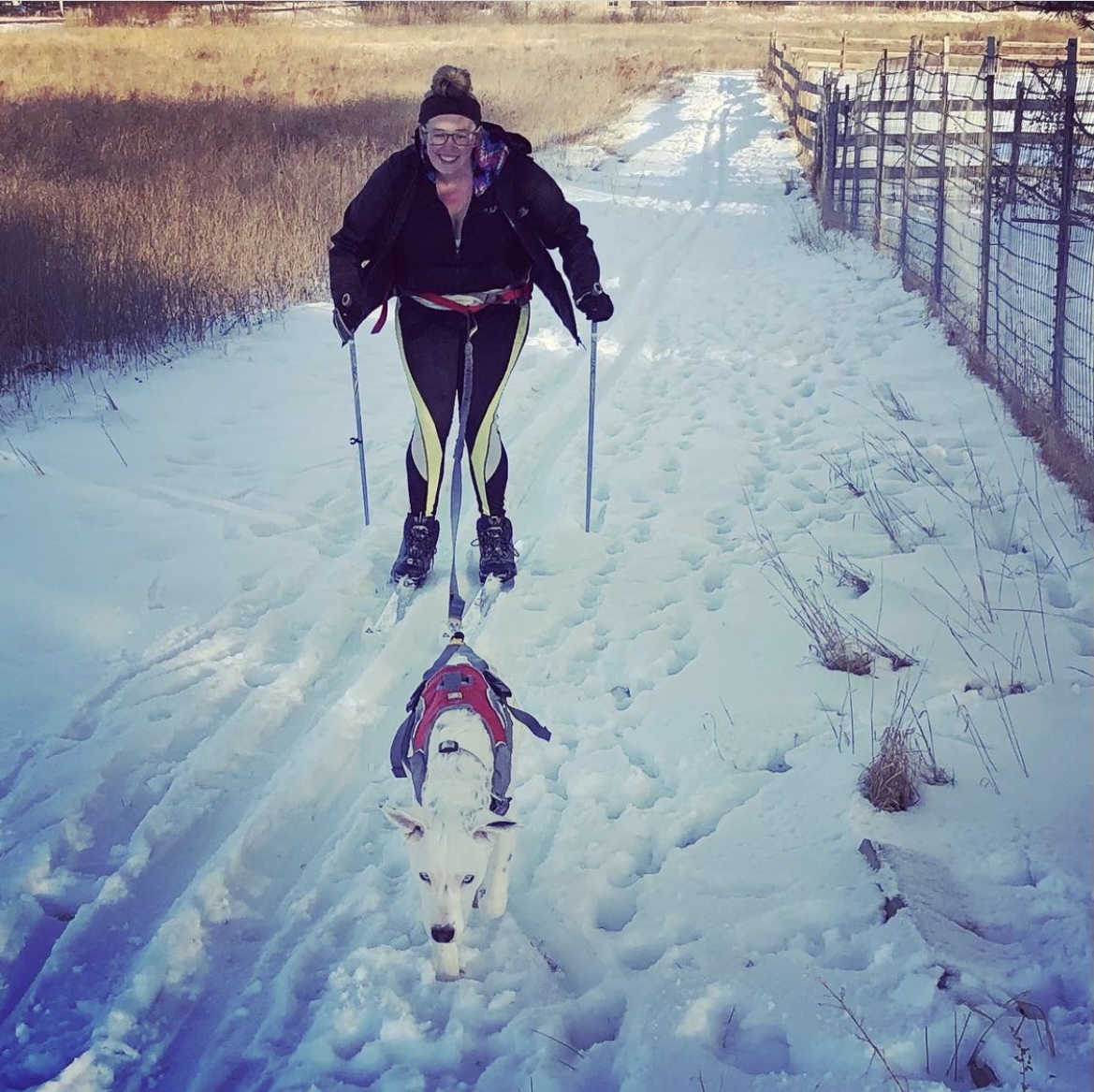
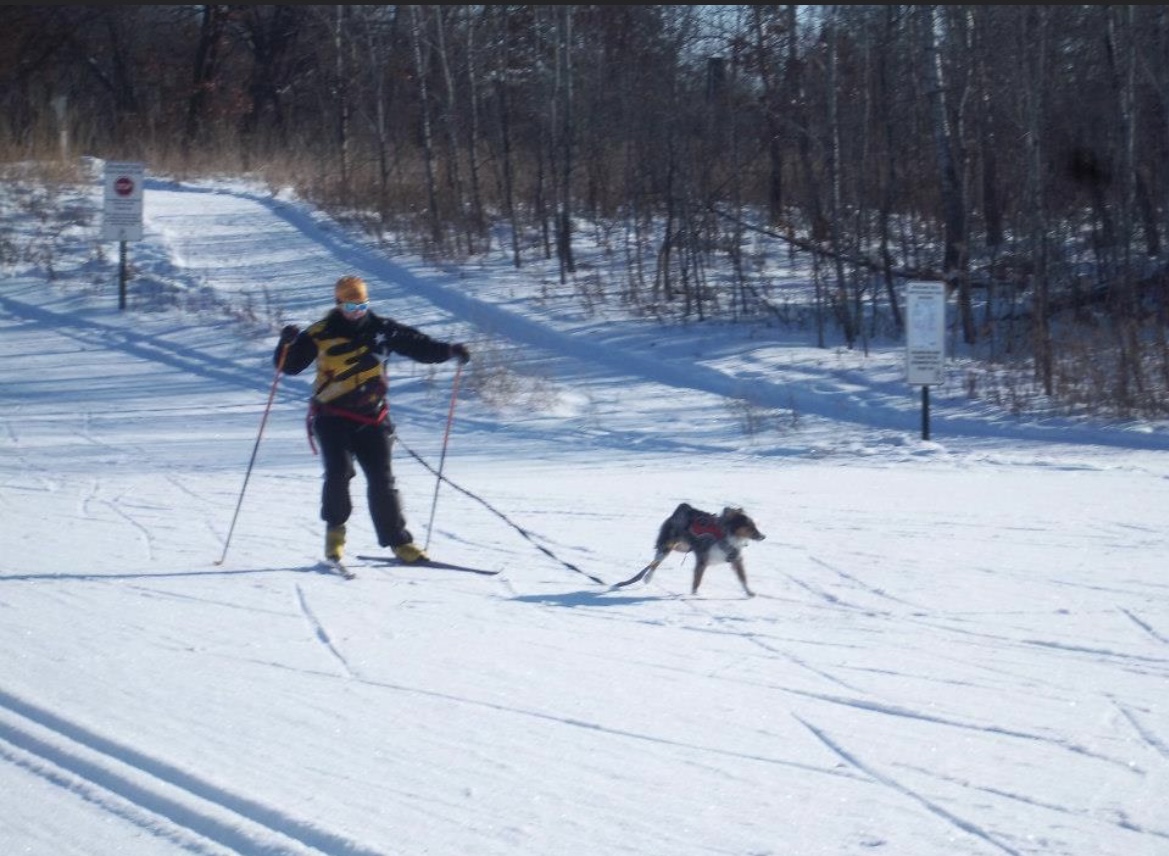
As many of us Minnesotans know, truly the best way to survive our cold winters is to find something enjoyable about them! Luckily there are plenty of winter sports for anyone and any interest- today we’d like to highlight skijoring; a winter activity that keeps us humans in shape and is such a positive way to exercise our dogs in winter! A positive way to look forward to our colder and darker months-
Skijoring is best described as a combination of dogsledding and cross country skiing; together we have a mushing event harnessed directly from dog to person and together cross wintery terrain for both hobby and competition.
The perfect skijoring dog can be any shape size or breed! And as people we can classic tour xc ski or skate ski for a quicker and more whole body workout! Some of the best skijoring partners enjoy working with their human, do not mind the winter elements, and can benefit from winter or consistent exercise. I’ve personally worked with aussies, mini aussies, and husky mixes in this sport and can honestly say size is not of biggest importance!
Ideally, we as the dogs’ leaders into this adventure are already confident and sure-footed on any type of cross country skis. And if not, we recommend hitting the trail without Fido for a bit. Once you are ready to help teach your 4-footed pal come back for the next session:
It’s important when introducing your dog to this sport that nothing we do is too much or too scary for them. Introduce equipment alone very slow and gradually, keeping things short and positive. When your dog has made some positive associations that our equipment itself is cool, then we can get strapped up and let them freely experience the sound/movements without being tied to us and ideally in a safe/secured fencing like backyard. Taking our time once your dog is fully used to equipment and skiing be sure they have a properly fitting and type of harness designed for pulling. Over time equipment will be no big deal and possibly our dogs are excited about. Many people cross train in warmer months with other omnijoring sports. Nothing wrong with some dogs needing more time and confidence.
Cue training will be important since as we ski our hands are full and we rely a lot on vocal commands. Familiarize your pup with “line out, gee, haw, easy, and woah” commands.
Next we can hit the trail! If you have the connection and ability, pairing your dog with an experienced skijoring dog will be very helpful. It’s even more easy for
Your first few outing to go out to groomed ski trails. Remember this all takes time and patience. Over time you and your canine compadre will be looking forward to snow and winters together to further advance your skills/technique and to explore all the amazing trails!
Happy skiing!
Beating the Winter Blues
Written by: Valerie Ferguson Customer Service Lead at ZimmVet
We all tend to go a little stir crazy when the weather is so cold that you can’t walk outside without your nose freezing, dogs are no exception. Long, cold winter days with minimal activity can cause your dog to be bored and may become destructive causing damage to your home or injury to themselves. Mental exercise has been proven to minimize behavioral issues. The goal of mental exercise is to engage your pet and exercise their brain. According to www.wagspgh.com – studies show that 15 minutes of mental exercise is equivalent to 60 minutes of physical exercise.
Some ideas for mental exercise include:
Puzzle toys
Setting up an obstacle course for your dog
Hide-and-seek – searching for treats
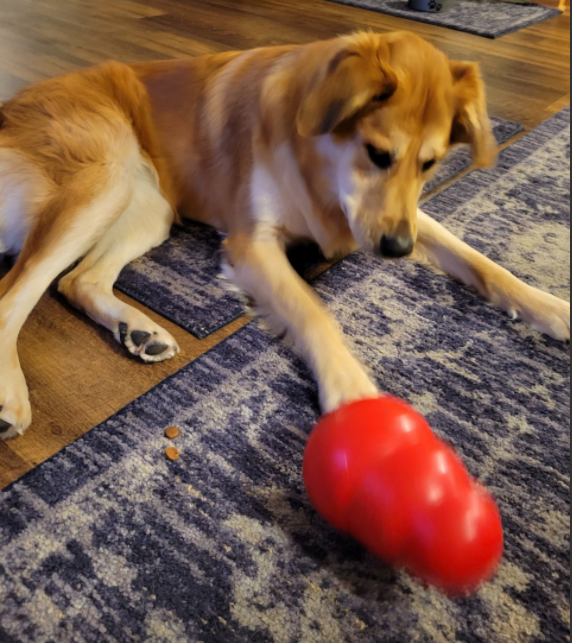
Stuffing a Kong with tasty treats (frozen)
Playing tug
Indoor fetch with a soft ball
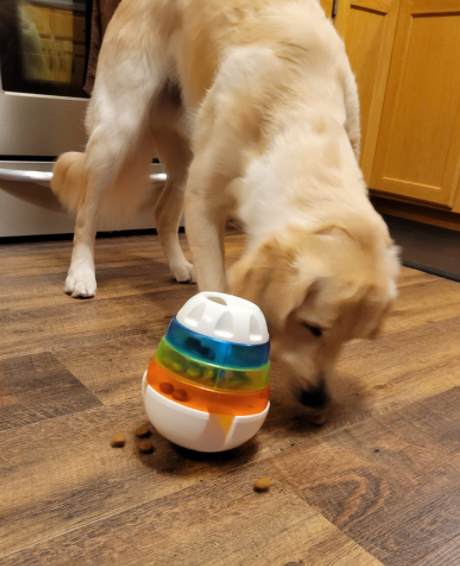
Shown above are a couple of photos of my dogs, Dakota and tucker, working for their dinner with a couple of their favorite puzzle toys.
Over the Counter Anxiety Supplements for Dogs
By: Dericka Haugan-Customer Service Rep at ZimmVet
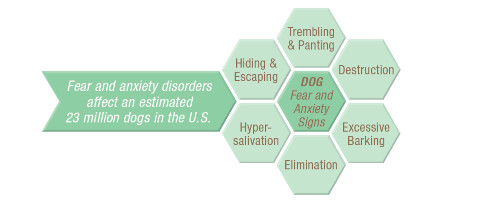
Do you notice your dog is showing signs of anxiety at home, daycare or when out and about with you? While you should always discuss options with your veterinarian there are some over the counter supplements you can try. You may have seen these for sale in your veterinary clinic but what are they and how do they work?
Solliquin
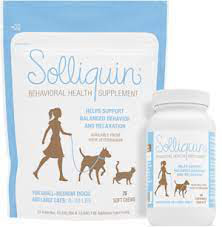
Solliquin is a behavioral health supplement that helps support balanced behavior and relaxation in dogs and cats. You can get Solliquin in a soft chew for dogs and cats between 8-30 pounds or in a capsule for dogs that are 8 pounds or more. Solliquin may take 30-45 days of consistent use to see results.
How does it work?
Solliquin contains a unique blend of amino acids, medicinal plants and protein.
- L-theanine: An amino acid found naturally in green tea. It directly stimulates the production of alpha brain waves, which create a state of deep relaxation, wakefulness, and mental awareness.
- Magnolia / Phellodendron: The combination of Magnolia and Phellodendron extracts appears to be synergistic, with the combination controlling stress and anxiety more effectively than either compound used alone.
- Whey Protein Concentrate: Contains NMXSLQ05®, a trademarked high quality protein source which supplements ten essential amino acids including the precursors of glutathione and serotonin.
This supplement is made to be used in combination with fear avoidance, behavioral modification and anxiolytics (supplements/pharmaceuticals). You can purchase Solliquin at select veterinary clinics or online, if purchased online make sure that you are purchasing through a reputable retailer as an over the counter you would not have to have a prescription to purchase. Purchasing through ZimmVet will give you a palatability guarantee so if your dog does not like them, you can return them to the clinic for a full refund.
Purina Pro Plan Calming Care
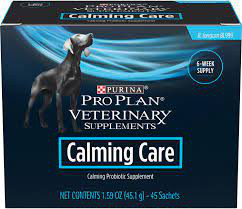
Purina Pro Plan Calming care is a calming probiotic supplement powder to be added to your dog’s food, it is also available for cats. It is recommended to help assist in the management of dogs exhibiting anxious behavior.
How does it work?
Proprietary use of probiotic strain BL999 to help dogs maintain calm behavior
Helps support dogs with anxious behaviors such as excessive vocalization, jumping, pacing and spinning
Helps dogs cope with external stressors like separation, unfamiliar visitors, novel sounds or changes in routine and location
Helps dogs maintain positive cardiac activity during stressful events
Promotes a positive emotional state and healthy immune system in dogs
Excellent palatability
Contains a probiotic with 1×10^9 CFU of Bifidobacterium longum BL999 per packet to support balanced behavior
At select veterinary clinics or online, if purchased online make sure that you are purchasing through a reputable retailer as an over the counter you would not have to have a prescription to purchase. Purchasing through ZimmVet will give you a palatability guarantee so if your dog does not like them, you can return them to the clinic for a full refund.
This supplement is made to be used in combination with fear avoidance, behavioral modification and anxiolytics (supplements/pharmaceuticals). You can purchase Purina Pro Plan Calming Care at select veterinary clinics or online, if purchased online make sure that you are purchasing through a reputable retailer as an over the counter you would not have to have a prescription to purchase. Purchasing through ZimmVet will give you a palatability guarantee so if your dog does not like them, you can return them to the clinic for a full refund.
Adaptil
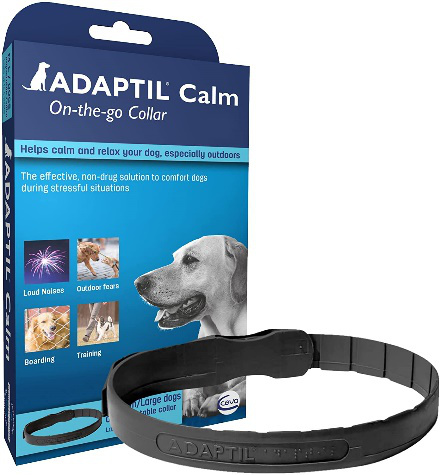
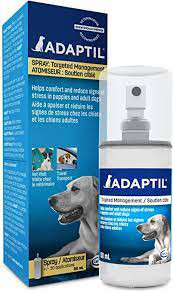
Not ready to use an ingestible supplement? Adaptil is an environmental tool that uses pheromones to help your dog feel calm and relaxed. Adaptil uses the natural pheromones similar to the ones their mothers used to give them natural comforting messages. This is also available for use in cats but be sure to get the correct species product as they do not work on the opposites.
How does it work?
Mother dogs communicate with their puppies through natural messages released into the air: “comforting messages “(called Pheromones). These odorless messages are only perceived by dogs. Cats and people are not affected. These “comforting messages” provide a strong signal of security and comfort to dogs of all ages. ADAPTIL Calm releases “comforting messages” to help dogs feel calm and relaxed at all times.
What not to do?
The collar is meant to be worn and should work for about 30 days, the collar should not be blocked by a harness, coat or regular collar. If it is repeatedly exposed to water, it may not work as long and should not be exposed to chlorine. The spray should not be sprayed directly on your dog and should be allowed to set for 10 minutes prior to letting your dog go into the area where they will be and should not be sprayed inside a carrier.
What is best for my dog?
There are so many options out there and the best way to decide what is best for your anxious pup is to discuss options with your veterinarian. It is best to try a supplement that will be able to be kept on the recommended schedule with each variety. You know your dog and should always advocate for their wellbeing. I hope this helps make discussing options with your veterinarian a little easier for you and helps make these products a little less confusing.
Anxiety in Dogs
By: Monica Bock, Assistant at ZimmVet
As pet owners we want our dogs to feel at ease and to always be happy and healthy! Sometimes depending on the pup and situation however, it can be difficult to manage their stress levels, which may or may not result in numerous behavioral issues. It is important to understand and be aware of issues such as peeing in the house, excessive panting, excessive drooling, chewing at their feet, over licking, etc. may not always be disease related behaviors. Please note however, if your pet is showing any of the listed issues discussed in this post, it is still recommended that the pet be seen by a veterinary professional first before determining if it is truly a stressed induced.
Common signs of stress in pets:
As stated by the AKC the following are common signs of stress and anxiety in pets:
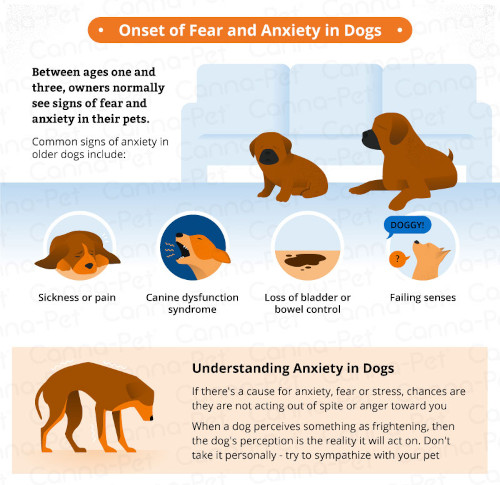
- Aggression
- Urinating or defecating in the house
- Drooling
- Panting
- Destructive behavior
- Depression
- Excessive barking
- Pacing
- Restlessness
- Repetitive or compulsive behaviors
It is important to note that not all pets will deal with stress or anxiety in the same way, as a pet owner getting to know your pet better and dog body language is a key first steps to treating your pet’s overall anxiety.
Different types of stress:
As there is not just one thing that causes anxiety there is typically one of the three types that may cause your pet to exhibit any one of the previously listed signs of anxiety above. One being separation anxiety, fear/noise related anxiety and aging anxiety.
What is separation anxiety?
Separation Anxiety being very common in pets, is the anxiety in which the pet experiences stress when the owner is absent/ way from the pet. While there are different levels of Separation anxiety, it can sometime lead a pet to have some unruly behaviors while their owner is away. According to the RSPCA website, 9 out of 10 dogs experience separation anxiety and may exhibit behaviors such as excessive barking, eliminating in the house, self-harm, or may display more destructive behaviors such as chewing or scratching inappropriate objects.
What is Fear and noise Anxiety?
Your pet may experience fear from loud noises or become anxious at the vet or other new places! Just like human children new experiences and sounds can be scary; depending on how the pet associates the experience anxiety may follow shortly after possibly progressing or becoming worse through time. Some pets may try to escape or hide from the source of their anxiety and in some cases, medication may be needed to manage it.
What is Aging Anxiety?
As our pets age they are going through changes that may cause stress on their mental state. A pet that could like going to the vet may not like it anymore or a pet that loved kids may just want to be left alone and avoid them as they age. It is important to know as a pet ages they may become more painful and not be able to do the same things they once did, because of this they can become stressed and show signs early on.
How to avoid stress:
To keep your pet happy and behaviorally healthy there are ways to avoid anxiety early on in development or to prevent your pets stress and anxiety form worsening over time. If you want to avoid stress/ anxiety early on in puppies or older pups making sure you have basic knowledge of dog body language, specific breed needs and basic personality traits as well as providing proper socialization you too can sometimes avoid major anxiety in your pet
Treatment options:
So, your pet has anxiety, don’t worry all is not lost! After consulting with your Veterinarian, they will provide options based on their observations, that would best suit your pet for them and their type of anxiety. While patients with your pet can play a big part in aiding your pet’s anxiety, there are several things we can try on our journey to an emotionally healthy pet! Your veterinarian may suggest training with a behavioralist-whom is specialized in training pets with anxiety, Socialization, supplemental treatment (natural supplements), or prescribed medication to help your pet’s anxiety.
- Natural/Non-Medication treatment: A natural way to help your pet with anxiety would be training- specifically with a behavioral specialist. A trainer that specializes in anxiety or behaviorally unhealthy pets, will be able to help guide you and the pet
- Natural/Supplemental Treatment: “Natural supplements help dampen the overreaction of the brain” (Krenz 2022), providing the dog with a sense of calm. While one may not see an immediate result, each product has its own trial period in which the medication should be given at specified dosages for best effects. These supplements such as Solliquin, Rescue Remedy, Zylkene and more provide support for mild and moderate anxiety to help a pet strive to become more behaviorally healthy.
- Veterinary treatment-prescription medication: For pets with server anxiety sometimes a vet prescribed medication is needed! Sometimes pets have such anxiety about an event, place, noise, etc. That they need something a bit stronger or maybe even something to pair with one of the other above options. A doctor will evaluate the pet and determine if and what type of prescribed medication best suits your pet. If the pet displays such anxiety that it becomes dangerous, uncomfortable or harmful for you the owner, the pet themselves or others around the pet this may be the best option for you.
Thanksgiving safety tips for your pets
By: Amanda Jelinek, ZimmVet Receptionist
While people enjoy tasty foods during holiday gatherings, there may be hidden dangers in these foods if your pet indulges in them.
Greasy foods such as turkey skin or pork, even in small amounts, could be the cause of a very painful and possibly life-threatening condition known as pancreatitis.
All of those tasty additions to our favorite dishes, such as onions, garlic, bacon, raisins and grapes can cause gastrointestinal upset and even more serious issues such as organ damage or failure. Many candies, gums, whipped toppings and desserts can contain a sweetener called Xylitol which can cause hypoglycemia (low blood sugar), seizures, liver failure, or even death in dogs.
Bones can be dangerous to your pet’s digestive tract, and may splinter or become stuck causing an obstruction requiring surgery to retrieve the object obstructing the gastrointestinal tract.
If you feel that your pet would enjoy a special treat for the Holidays you can always splurge on a new bag of pet treats for them, or if you would like to share a tiny piece of white turkey meat, a tiny piece of unseasoned baked potato, a couple of unseasoned green beans or a few plain peas, please do. Always be mindful of the amount of vegetables your pet ingests as they may have adverse effects on the Gastrointestinal tract.
The ASPCA website offers a comprehensive listing of foods that are toxic for your pet.
Pet Food Grain Free Food Warning
By Dr. Maria Krenz, DVM
The U.S. Food and Drug Administration (FDA) has been investigating the link between grain-free diets and enlarged hearts (dilated cardiomyopathy) or heart disease in dogs and cats since 2018. Current research points to a reduced availability of taurine, an amino acid needed for heart function. Research also suggests Golden Retrievers may be genetically predisposed to taurine deficiency, making then at even higher risk when eating these diets.
Implicated Diets
Multiple diets have been implicated in the FDA’s findings. A June 2019 FDA report provides a list of pet food brands, which are grain-free. Almost 50% of the cases reported to the FDA were being fed Acana, Zignature or Taste-of-the-Wild brand diets. An additional, 13 other companies’ pet food diets were also listed.
FDA analysis of the diet composition in heart disease cases found that 91% were being fed a grain-free diet, and 93% had peas/lentils as the major grain substitute in the fed diet. Even if the food your pet is eating is not on the list, you should read the label. If your pet’s food is grain free or uses peas/lentils as a substitute for grain, you should consult your veterinarian right away and look at alternative diets.
Myth- Grains are a common Food Allergy
There is a myth that grains cause allergies, which is not supported by veterinary medicine. This is not the case. The reality is that true food allergies are extremely low in dogs and cats, and the offending substances are usually not grains. Grain allergies in dogs are so uncommon, in fact, they affect less than one percent of dogs. Pets are more likely to have an allergy to proteins like beef or chicken. If you feel like your pet has a food allergy or sensitivity, it is best to talk to your veterinarian about prescription diets formulated specifically for pets with food allergies.
Myth-Cats and Dog don’t eat Grains in the Wild
A common myth supporting grain-free foods is that cats and dogs in the wild do not eat grain. When an animal catches prey, it not only eats the muscle, but it also ingests the organ content. Many of the animals, which are prey of wild cats and dogs, do eat grain in their diet. When a cat or dog in the wild eat the organs of their prey, they are consuming small amounts of grain. If an animal only ate the meat of its prey, and not the organs with grain, it would develop nutritional deficiencies.
Common Grains
Until more research is available, ZimmVet does not recommend feeding a grain-free food. When looking at your pet food label to check if your food has grains, you might see a combination of some of the following: Wheat, Corn, Barley, Oats, Rye, Rice and Sorghum.
More information on the link between heart disease and grain free diets is available through FDA websites and multiple Veterinary University websites including University of California-Davis and Tufts University. Search “FDA grain free pet diet.” Please contact your veterinarian for medical advice with choosing your pet’s food.
Disclaimer: This written content is meant to be educational and is not medical advice. Always consult a veterinarian about medical advice for your pet.
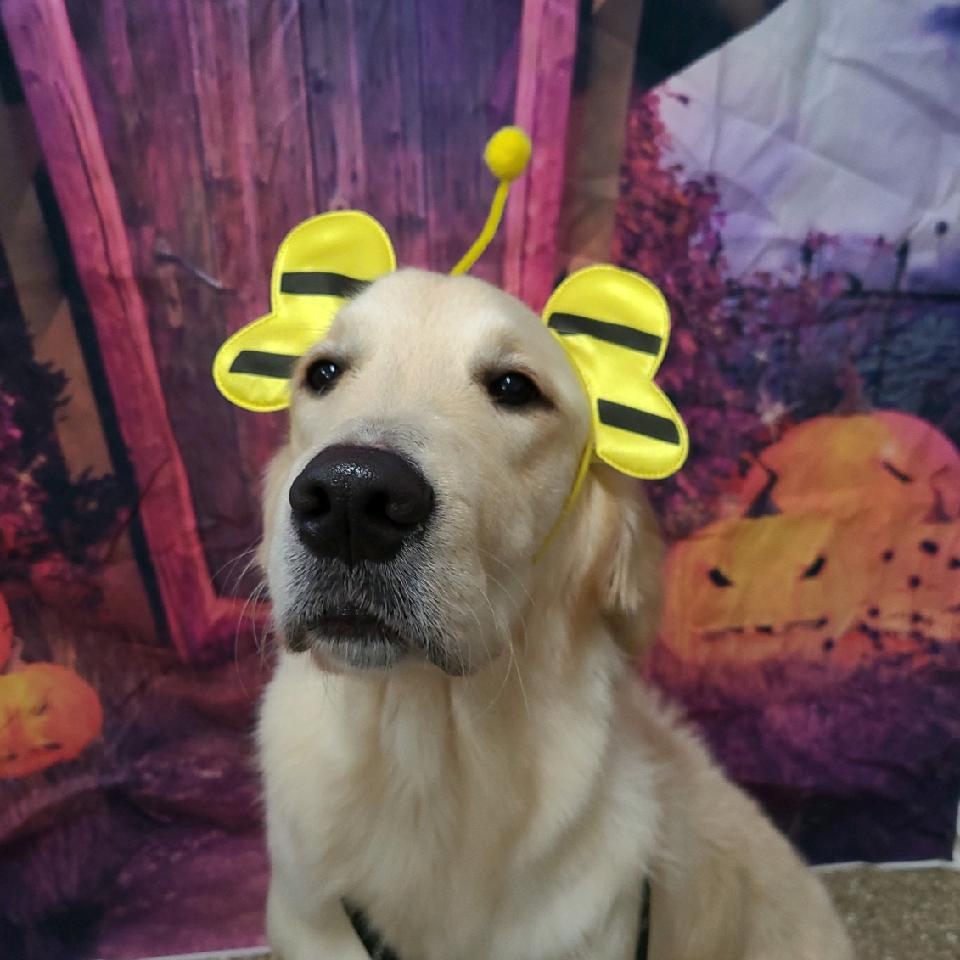
Trick or Treating with Your Dog
By Amanda Jelinek, Receptionist at ZimmVet
Halloween is such a fun time for you and your families; however, what about your furry family members?
Although we may think it would be great to have our dog with us while trick or treating, they may not think the same.
First, I would take some time and think of your dogs’ behaviors in different situations. Does your dog like ALL kids? Is your dog noise sensitive? Does your dog react to sudden movements or costumes? Does your dog do well on a leash? Does your dog startle easily in the dark? If you are unsure of any of these, it would be best to keep your dog safe at home in a quiet spot.
If your dog is a social butterfly and you think they will do great, do a ‘test run’ and see how they do prior to the big night. Be alert with your dog; make sure they do not eat any candy or anything off the ground. Remember that chocolate is toxic to them. If they ingest wrappers, toys, glow sticks etc. contact your veterinary office.
Some other things to be prepared for is to make sure your dog is visible; we recommend putting a reflective tag or leash on your dog. Depending how long you will be out, bringing water is a good idea. If you want to reward along the way, you should bring your dog’s favorite treats. Also, make sure you bring poop bags to pick up after your dog!
If you have any questions about bringing your dog out for this fun evening, reach out to your veterinary clinic staff.
Enjoy your evening and stay safe!!!
Genetic Health Testing
By Dr. Maria Krenz, DMV- ZimmVet
Genetic Health Testing
There are a variety of companies who provide genetic testing. Some genetic tests an owner can collect at home with a swab of the mouth. Other genetic tests require a blood draw at a veterinary office. Tests can provide information such as:
- Breed makeup of your dog
- Genetic mutations
- Predictor of adult weight and size
- Genetic traits such as coat, muscling, tendency to overeat
Veterinary Use
Your veterinarian may recommend you have a genetic test preformed on your dog, if they are a breed at risk for certain genetic diseases or showing illness that could be related to a genetic disease. An example of a disease is the multidrug resistance mutation 1 (MDR1). This disease refers to a specific mutation that can occur at a gene known as the MDR1 gene. A mutation at the MDR1 gene makes dogs more sensitive to the negative effects of certain medications. Dogs with this gene can have life threatening reactions to certain medications. Approximately three of every four collies have the mutant MDR1 gene. The MDR1 mutation has also been found in Shetland Sheepdogs (Shelties), Australian Shepherds, Old English Sheepdogs, English Shepherds, German Shepherds, Long-Haired Whippets, Silken Windhounds, and a variety of mixed-breed dogs.
Knowing your pet’s genetic makeup can create more awareness of diseases that are more common in certain breeds. For example, if your pet has Cavalier King Charles Spaniel in its background your veterinarian would want to do regular screens for heart disease, since it is very common in this breed.
Pet owners will need the help of their veterinarian or the genetic testing company’s technical staff to help decipher the genetic mutation part of the test. Some of the mutations are not significant, but others may be.
As a pet owner, knowing your dog’s breed background can help with knowing your dog’s temperament and tendencies. In a puppy, it can give you insight on what to expect as they grow and mature.
Examples
Examples of companies that provide Genetic testing include:
Royal Canin Genetic Health Testing – www.royalcanin.com/us/dogs/genetic-health-analysis
Wisdom Panel – www.wisdompanel.com/
Embark – embarkvet.com/
Disclaimer: This written content is meant to be educational and is not medical advice. Always consult a veterinarian about medical advice for your pet.
Recipe for Fun with the Pups!
Pupcakes Recipe
By: Mysi Szczech, Veterinary Technician in Training at ZimmVet
Our dogs are important members of our family. We love to celebrate them and I think a great way to do that is to make them a special birthday treat! I found a recipe that’s easy, quick and I have made them for my own puppies and they loved them! Here is the recipe!
Ingredients:
Cupcakes
-2 tbsp natural peanut butter
-2 tbsp oil
-1 medium banana (mashed)
-2 tbsp honey
-1/2 cup flour
-1/2 tsp baking soda
-1/4 baking powder
Frosting
-1 medium banana (mashed)
– 4 tbsp peanut butter
Cupcake recipe:
- Preheat oven to 350. Spray muffin tin with non-stick cooking spray or use paper muffin cups.
- 2. Mash one banana
- Mix banana, oil, peanut butter and honey in a mixing bowl.
- Add the flour, baking soda and baking powder. Stir to combine.
- Scoop batter into muffin tin until each one is ¾ full.
- Bake for 10-15 minutes. The cupcakes are done when a toothpick is inserted in the middle comes out clean.
- Allow cupcakes to cool for 5 minutes then remove them from the pan. Allow to cool completely before frosting.
Frosting recipe:
- Mash remaining banana. The smoother you mash it the smoother the frosting will be.
- Add peanut butter and mix until smooth.
- Spread frosting on cooled cupcakes.
- Top with small dog treat for a little extra!
Make Puppies into Good Citizens
By Dr. Maria Krenz, DVM – ZimmVet-763-856-4848
Puppy Socialization Builds Confident Adult Dogs
For a puppy to become a confident adult, we must provide a good learning foundation. This foundation is more than teaching the basic commands of sit and lie down. It is also about exposing your puppy to places and situations they will most likely experience during their entire lifetime.
Socialization goes beyond having your puppy play with the neighbor dog or a family member’s dog. Your puppy will learn how to play with familiar dogs, but they will not gain enough exposure to other dogs and situations to fully learn. Socializing your puppy to dogs of all breeds is very important, and is a vital factor in teaching them acceptable play with other dogs. Puppies learn appropriate play and bite inhibition during these play times with other dogs. This is something that we cannot teach them.
Socializing your puppy to people of every ethnicity, tall and short, young and old, as well as people with glasses, hats or other accessories is also important for their development.
Positive Experiences Can Help Shape a Puppies Personality
A puppy brain is like a little sponge. Everything it is exposed to stays in their little memory bank. Make sure when exposing them to new things and situations that it is done in a positive way. These experiences are what helps form their personality. They are born with a certain temperament, but the positive experiences they are introduced to and how they are raised is what forms their personality.
Puppies are learning all of the time, not just when they are in a structured environment like a puppy training class. Using harsh punishment, rough handling or tools like a pinch collar, training (choke) collar or electronic collar can hurt them and change their personality, negatively. These practices will also make them more likely to be reactive and show aggressive behaviors as an adolescent and adult.
All of the time and investment you put into your puppy by giving them a good, positive learning foundation will payoff throughout their life. Puppies can be challenging, but watching your puppy develop into a confident adult is worth it.
Some Great ways to Socialize your puppy
- Doggie Daycare.
- Puppy Play Parties
- Training Classes
- Taking them with you everywhere. Allow them to meet other people, and pets.
- Let them investigate their surroundings during their walks.
Disclaimer: This written content is meant to be educational and is not medical advice. Always consult a veterinarian about medical advice for your pet.
